


In the Footsteps of Jakob Böhme
Görlitz History
A posthumous portrait of Böhme (1575–1624) by Gottlob Glymann is held at the Museum of West Lusatia in Kamenz.
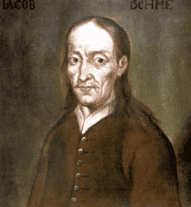
Alongside Mayor and mathematician Bartholomäus Scultetus (1540–1614), Jakob Böhme is one of the most famous historical figures from Görlitz. Both were contemporaries.
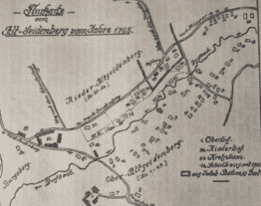
Jakob Böhme was born in 1575 in Nieder-Altseidenberg, at Freihaus No. 73 (today Stary Zawidów, Poland). His birthplace likely stood on the site of the current house number 90.
Quelle: Richard Jecht: Jakob Böhme – Gedenkausgabe der Stadt Görlitz zu seinem 300jährigen Todestage, 1924, Seite 5
Böhme likely attended the town school in Seidenberg from 1581 and began a three-year shoemaking apprenticeship in 1589. Afterwards, he spent two to three years as a journeyman travelling through Upper Lusatia, Lower Silesia, and Bohemia.
In 1594, he settled in Görlitz. In 1598, he bought a house on Rabengasse for 300 Marks, with payments continuing until 1608. This house is now known as the Jakob Böhme House at Daszyńskiego 12 in Zgorzelec.
In 1599, Böhme became a master shoemaker in Görlitz and married Katharina Kuntschmann, the daughter of a wealthy butcher. On April 24 of the same year, he officially registered as a citizen of Görlitz, paying four “Schock” Groschen.
On the same day, he purchased one of the 44 shoemaker stalls on the Untermarkt from Valentin Lange for 240 Marks. Lange had married into Böhme’s wife’s family.
Every guild master was required to become a citizen and marry within six months.
- 1600–1610
- 1612–1614
- 1624 – Jan–Jul
- 1620-1623
- 1624–1626
In 1604, Böhme was accused of tanning leather beyond his personal needs and harming the interests of the official tanners. He was fined 6 shillings (72 Groschen).
On July 26, 1608, he sold his house on Rabengasse for 330 Marks but remained there with his family as a tenant until 1610. That year, he purchased a new house for 375 Marks, to be paid off by April 27, 1618.
This new house was located near his previous one, close to the Old Town Bridge, on a corner lot across from what is now the Dreirad Mill in modern-day Zgorzelec. The building was largely destroyed in 1641 by Swedish troops defending the city from the imperial army.
At the beginning of 1612, Böhme started writing his first work, Aurora (The Morning Red Rising). Through this, he came into contact with other mystical and theosophical thinkers and began to draw public attention.
Between 1612 and 1614, Görlitz was struck by a plague epidemic.
On March 12, 1613, Böhme sold his shoemaker stall for 470 Marks. From then on, he and his wife earned their living by trading in yarn and gloves, which they bought from local farmers. They sold these goods on trade journeys throughout Lower Silesia, Lusatia, and Bohemia.
Business was initially good, but the Thirty Years’ War (1618–1648) soon brought disruptions. In 1620, around 18,000 soldiers were quartered in Görlitz and the surrounding area to defend against Saxon Elector Johann Georg I, an ally of Emperor Ferdinand I.
At that time, Görlitz had a population of about 10,000.
On July 26, 1613, Böhme was briefly imprisoned in the town hall after being denounced by his main opponent, Gregor Richter, the city’s head pastor.
Richter accused him of heresy due to the theological content of Aurora, which conflicted with Lutheran orthodoxy. Mayor Scultetus summoned Böhme for questioning. He was released shortly afterwards with a warning not to write such works again.
Unhappy with the lenient outcome, Richter summoned Böhme before the Görlitz clergy assembly on July 30, 1613. There, Böhme was examined and found to be faultless in matters of faith.
Nevertheless, he was formally banned from writing on matters concerning the church.
1624 – Return, Trial and Final Years
In early 1624, Böhme returned to Görlitz. That same year, he published On True Repentance and On True Resignation. These works were commissioned by Johann Sigismund von Schweinichen and approved by the Duke of Liegnitz.
In March 1624, the city council discovered Böhme’s authorship and accused him of violating the previous ban. Pastor Gregor Richter formally brought charges before the magistrate.
Even under Saxon occupation, the city’s highest judicial authority was still the emperor as King of Bohemia.
On March 26, 1624, Böhme was questioned by the city council. To avoid a formal trial and public scandal, the council ordered his departure from Görlitz. However, it was not enforced as a strict expulsion.
Thanks to his noble supporters, Böhme found refuge at the Saxon court in Dresden. On May 9, 1624, he travelled via Zittau and was accommodated in the residence of the court alchemist and physician Benedict Hinkelmann.
He was also received at the Pillnitz estate by Joachim von Loß, councillor to the Elector and the Emperor. He met with the court preacher and marshal. His books were available in Dresden bookshops.
Böhme returned to Görlitz in mid-July 1624.
In 1620, Elector Johann Georg I invaded Upper Lusatia, captured Bautzen, and burned it. As a result, Upper and Lower Lusatia came under Protestant control and military occupation.
These events prompted Böhme to break his silence and defy Richter’s writing ban. His theosophical epistles soon appeared in rapid succession.
In the early 1620s, he received food and financial support – in part in exchange for permission to copy his works.
On December 27, 1623, the first version of The Tables of the Three Principles appeared.
In January 1624, Böhme fled to the castle of Johann Sigismund von Schweinichen at Świny near Legnica, in the Duchy of Liegnitz. There, in February 1624, he wrote a second version of The Tables of the Three Principles.
1624 – Return, Trial and Final Years
In early 1624, Böhme returned to Görlitz. That same year, he published On True Repentance and On True Resignation. These works were commissioned by Johann Sigismund von Schweinichen and approved by the Duke of Liegnitz.
In March 1624, the city council discovered Böhme’s authorship and accused him of violating the previous ban. Pastor Gregor Richter formally brought charges before the magistrate.
Even under Saxon occupation, the city’s highest judicial authority was still the emperor as King of Bohemia.
On March 26, 1624, Böhme was questioned by the city council. To avoid a formal trial and public scandal, the council ordered his departure from Görlitz. However, it was not enforced as a strict expulsion.
Thanks to his noble supporters, Böhme found refuge at the Saxon court in Dresden. On May 9, 1624, he travelled via Zittau and was accommodated in the residence of the court alchemist and physician Benedict Hinkelmann.
He was also received at the Pillnitz estate by Joachim von Loß, councillor to the Elector and the Emperor. He met with the court preacher and marshal. His books were available in Dresden bookshops.
Böhme returned to Görlitz in mid-July 1624.
On August 13, 1624, his longtime adversary Gregor Richter passed away.
Böhme and his wife continued to earn a living as peddlers, often travelling separately. After returning from a journey to Silesia while already unwell, he fell seriously ill on November 7.
He died during the night of November 16–17, 1624. A local governor happened to be in Görlitz and ensured that Böhme received a Christian burial.
He was laid to rest on November 18 with full participation from the shoemakers’ and tanners’ guilds, accompanied by bells and a large public presence (according to Kober).
The noblemen who had supported him wanted to erect a cross at his grave, but this was later removed.
Böhme’s wife Katharina died in 1625 or 1626, most likely from the plague she contracted while caring for plague victims.
On August 13, 1624, his longtime adversary Gregor Richter passed away.
Böhme and his wife continued to earn a living as peddlers, often travelling separately. After returning from a journey to Silesia while already unwell, he fell seriously ill on November 7.
He died during the night of November 16–17, 1624. A local governor happened to be in Görlitz and ensured that Böhme received a Christian burial.
He was laid to rest on November 18 with full participation from the shoemakers’ and tanners’ guilds, accompanied by bells and a large public presence (according to Kober).
The noblemen who had supported him wanted to erect a cross at his grave, but this was later removed.
Böhme’s wife Katharina died in 1625 or 1626, most likely from the plague she contracted while caring for plague victims.